Home
Travel
NPS States
NPS Types
National Historic Sites - Georgia
Andersonville National Historic Site
10/2/1997 Continued east to Andersonville to the NHS. Saw a good film in the visitor center. Stopped at
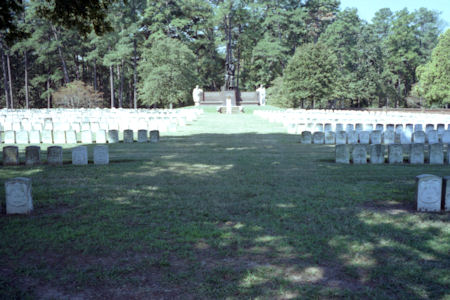
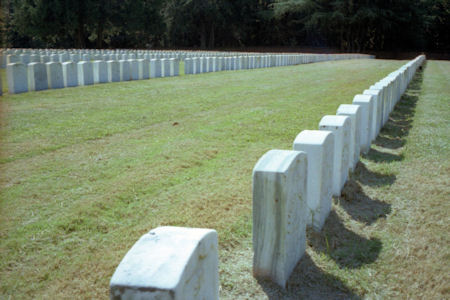
the National Cemetery; row after row of the about 13,000 buried here that died at Andersonville POW camp. Drove the perimeter
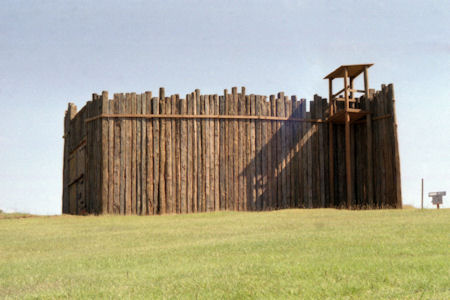
of the camp, stopping to walk around seeing the “dead line”, a reconstructed section of the 20 foot high fence, monuments,
wells and escape tunnels, etc. Hard to believe 30,000 men were here.
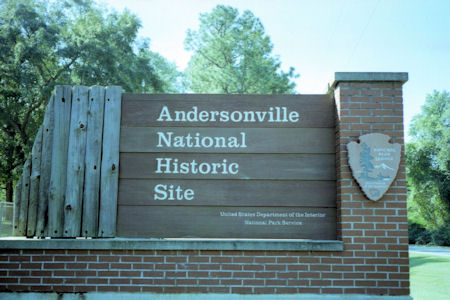
The park sign
|
Part of the massive fence
|
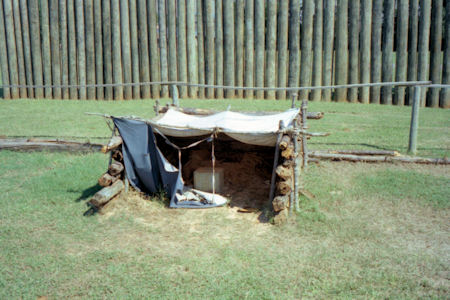
A typical "camp"
|
The National Cemetery ...
|
... with gravestones standing like soldiers
|
5/3/2026 NPS Andersonville National Historic Site. The site began as a stockade built about 18 months before the end of the U.S. Civil War
to hold Union Army prisoners captured by Confederate soldiers. Located deep behind Confederate lines, the 26.5-acre Camp Sumter (named for the south Georgia county
it occupied) was designed for a maximum of 10,000 prisoners. At its most crowded, it held more than 32,000 men, many of them wounded and starving, in horrific
conditions with rampant disease, contaminated water, and only minimal shelter from the blazing sun and the chilling winter rain. In the prison's 14 months of
existence, some 45,000 Union prisoners arrived here; of those, 12,920 died and were buried in a cemetery created just outside the prison walls. We spent a bit
more time here, as befitting the NPS status at an important Civil War site. We stopped first at the impressive National Cemetery, with gravestones lined up close
to each other across the huge area, over the final resting place of almost 13 thousand POWs that died under the horrific conditions at the camp. We then drove
the loop road essentially following the bounds of where the huge stockade had been. We stopped at one pullout where a reconstructed section of the stockade and
gate showed just how high and imposing they had been, removing all hope of getting out and away from the miserable conditions inside. Also there is a pavilion
later built over Providence Spring, a spring that appeared within the camp after a storm, providing some relief to the prisoners with little source of fresh
water. This stone building is also considered a Roadside Attraction (RA Providence Spring).
Cemetery entrance monument

|
I photo ...

|
... endless lines of grave markers

|
Close and far views ...

|
... of almost 13000 ...

|
... grave markers

|
Ken and me at the cemetery

|
A long view of the camp from the north

|
Ken and me by the ...

|
... reconstructed gate section

|
Providence Spring (RA)
outside ...

|
... and inside

|
Up by the gate section ...

|
... with me

|